Get 10% Off On Your First Order CODE: FIRST10
Get 15% Off When You Refer A Friend Code: JFRIEND


The future of EV charging is mobile, fast, and seamless—no more waiting or worrying.
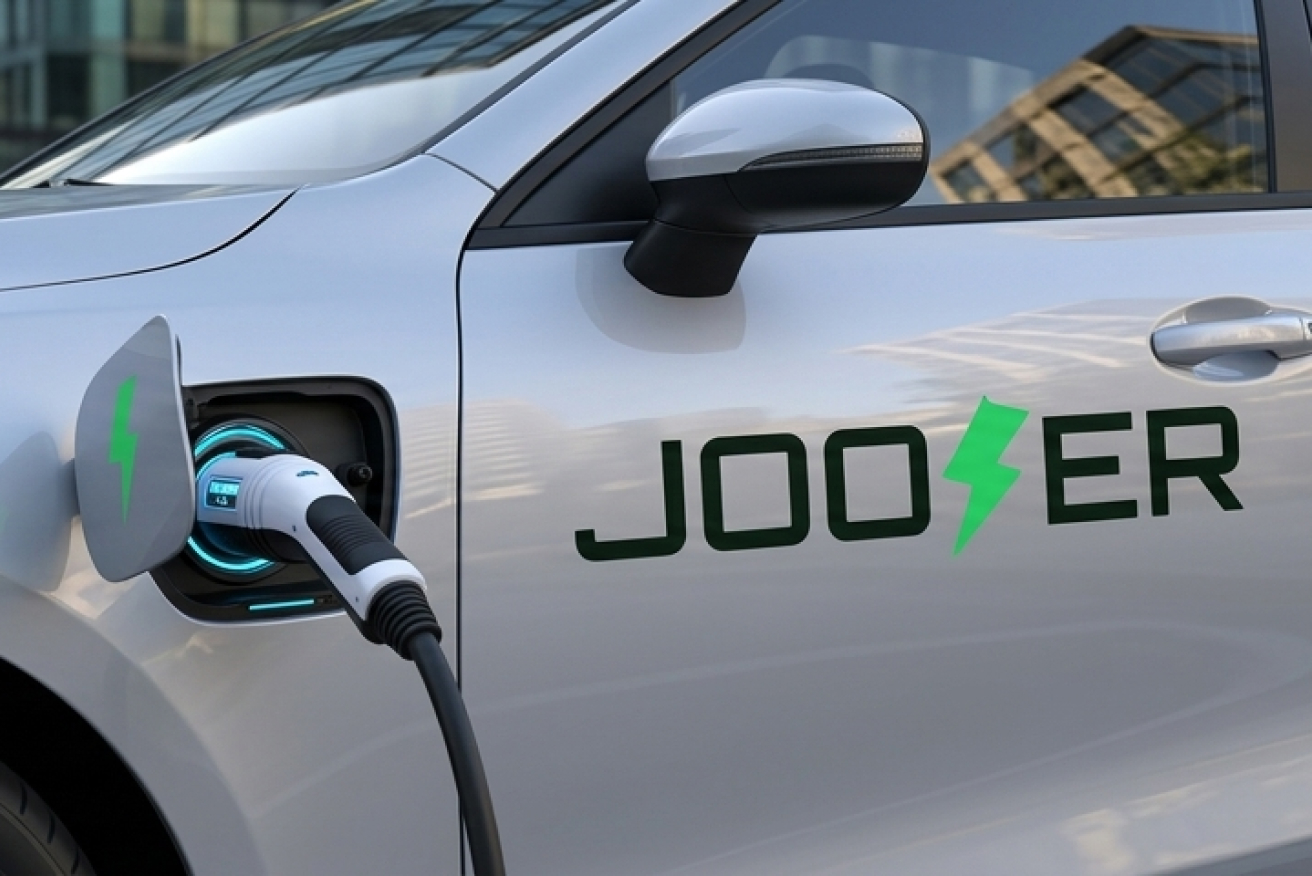
The electric revolution isn't coming — it's already here. But as millions of Americans go electric, one question keeps surfacing: "What happens when I can't find a charger?" This deep dive explores the latest EV charging technology, where the industry is heading, and why on-demand mobile EV charging is quickly becoming the smartest answer.
Let's start with some numbers that'll stop you mid-scroll.
The U.S. EV charging infrastructure market was valued at $5.09 billion in 2024 and is projected to grow at a staggering 30%+ annually through 2030. Globally, the EV charging station market is expected to surge from $22.93 billion in 2026 to $139.93 billion by 2034. In Q2 2025 alone, the U.S. added over 4,200 new DC fast charging ports — the highest quarterly deployment ever recorded.
That's not incremental growth. That's a paradigm shift.
Yet here's what the numbers don't show: millions of EV drivers still face dead batteries in parking garages, stranded moments on city streets, and the daily anxiety of wondering whether that one public charger on the block is actually going to work. Infrastructure is growing, yes — but it hasn't caught up with reality. Not yet.
That gap? That's exactly where advanced charging technologies — and services like Jooser — step in.
Gone are the days when charging meant leaving your car overnight. Today's ultra-fast charging systems deliver 350 kW or more, meaning compatible EVs can reach 80% charge in roughly 15–20 minutes.
Tesla's Supercharger network continues deploying 100% 250+ kW stations, while major CPOs are now standardizing around 10 ports per station at 350–400 kW each. The experience is starting to feel less like "waiting" and more like a pit stop.
But here's the human truth: ultra-fast charging only helps when you can get to a charger. For apartment dwellers, urban drivers, or anyone stuck miles from the nearest station, speed doesn't solve the access problem.
This is the future EV charging technology that makes most people do a double-take when they first hear about it. Vehicle-to-Grid (V2G) charging allows your EV to send electricity back into the grid — essentially turning your car into a mobile battery for your home or neighborhood.
Imagine pulling into your driveway, stepping out of your car, and walking inside — and your EV just... charges itself. No cables. No connectors. No fumbling in the dark.
Wireless inductive charging is making this a 2026 reality. Porsche has confirmed its Cayenne Electric will feature 11 kW inductive home charging starting in 2026, using a floor plate with Wi-Fi communication that achieves approximately 90% efficiency and begins automatically once the vehicle is parked. While the system carries a premium price point today, it signals the direction the industry is heading: zero-friction charging.
Artificial intelligence is rapidly becoming the backbone of modern EV charging infrastructure. AI systems can now predict charging demand based on historical usage patterns, balance loads across multiple energy sources, dynamically adjust pricing, and schedule charging sessions to minimize peak-hour strain on the grid.
Heavy-duty trucking is the final frontier — and it's cracking open fast. The Megawatt Charging System (MCS), designed specifically for commercial trucks and large vehicles, hit a historic milestone in July 2025 when Designwerk Technologies demonstrated a charging session that exceeded 1.1 megawatts, bringing a truck from 10% to 80% charge in just 42 minutes.
Also Read:- The Complete Guide to Mobile EV Charging Services
Let's break this down honestly, because this is a comparison every EV driver should understand.
Public chargers are fantastic when they're available, working, and nearby. But they come with real-world frustrations:
Portable EV charging, by contrast, comes to you. It's the difference between a gas station and a fuel delivery truck pulling up to your driveway.
A mobile EV charging truck dispatched on demand can reach you at home, at work, in a parking garage, or at the side of the road — no hunting for stations, no waiting in line, no detours.
The concept is elegantly simple: you open an web app, tap a button, and a charging vehicle comes to you. Think of it as the Uber of EV energy.
Services like Jooser have built exactly this model for American drivers. Jooser's on-demand mobile EV charging platform dispatches trained technicians with portable charging units to wherever your vehicle is parked — day or night. No infrastructure. No installation. No waiting around at a station hoping the charger is working.
For EV roadside service in NYC specifically, this model solves a uniquely urban problem. New York City is one of the most EV-forward cities in America — the city has committed over $1 billion to EV infrastructure — yet it's also one of the hardest places to own an EV without home charging access. Dense street parking, limited Level 2 public ports, and high charger utilization mean that city drivers face a real reliability gap.
Jooser isn't just a roadside assist service with a power bank. The platform is built on advanced charging technologies that deliver meaningful power, fast:
Did you know? According to industry data, the number of U.S. fast charging ports is forecast to surpass 100,000 by 2027 — nearly four times the number in 2022. But fixed infrastructure can't be everywhere. Mobile charging fills the gaps.
Solid-State Batteries will unlock even faster charging. Companies including Dodge and Mercedes-Benz have announced upcoming vehicles with solid-state battery technology, which can handle higher power inputs more safely and efficiently than current lithium-ion cells.
Thermal-Adaptive Charging systems that adjust protocols based on temperature and conditions are moving from research to production, improving safety and efficiency in both extreme heat and cold.
Charging-as-a-Service (CaaS) is replacing upfront infrastructure investment for fleets and businesses. Rather than buying and maintaining chargers, operators pay a subscription or per-charge fee — the same shift from ownership to service that reshaped software, cars, and entertainment.
Interoperability is finally arriving globally. In September 2025, Hubject — the global eMobility interoperability leader — announced OCPI support, meaning EV drivers can increasingly roam across charging networks without needing a different app or card for each provider.
Renewable-Integrated Charging is becoming the norm. When solar panels, battery storage, and smart charging software work together, EV charging can be powered almost entirely by clean energy — making the already-low emissions of EVs even lower.
Behind every stat in this article is a driver making a real-world decision.
It's the nurse finishing a night shift who can't afford to detour 20 minutes to a charging station. It's the small business owner managing a fleet of delivery EVs who doesn't have $200,000 to spend on charging infrastructure. It's the NYC apartment renter who went electric, believed in the mission, and now faces the daily stress of wondering where the next charge is coming from.
The technology exists. The investment is flowing. The infrastructure is being built. But today, the gaps are real — and they fall hardest on the people who most need EVs to work reliably.
On-demand mobile EV charging isn't a workaround. It's part of the solution.
Jooser brings the future of EV charging to your car — wherever it's parked.
Don't wait at a charger. Let the charger come to you.