Get 10% Off On Your First Order CODE: FIRST10
Get 15% Off When You Refer A Friend Code: JFRIEND


Fleet operators across the USA are turning to on demand EV charging USA solutions to eliminate downtime, cut infrastructure costs, and keep vehicles on the road longer.
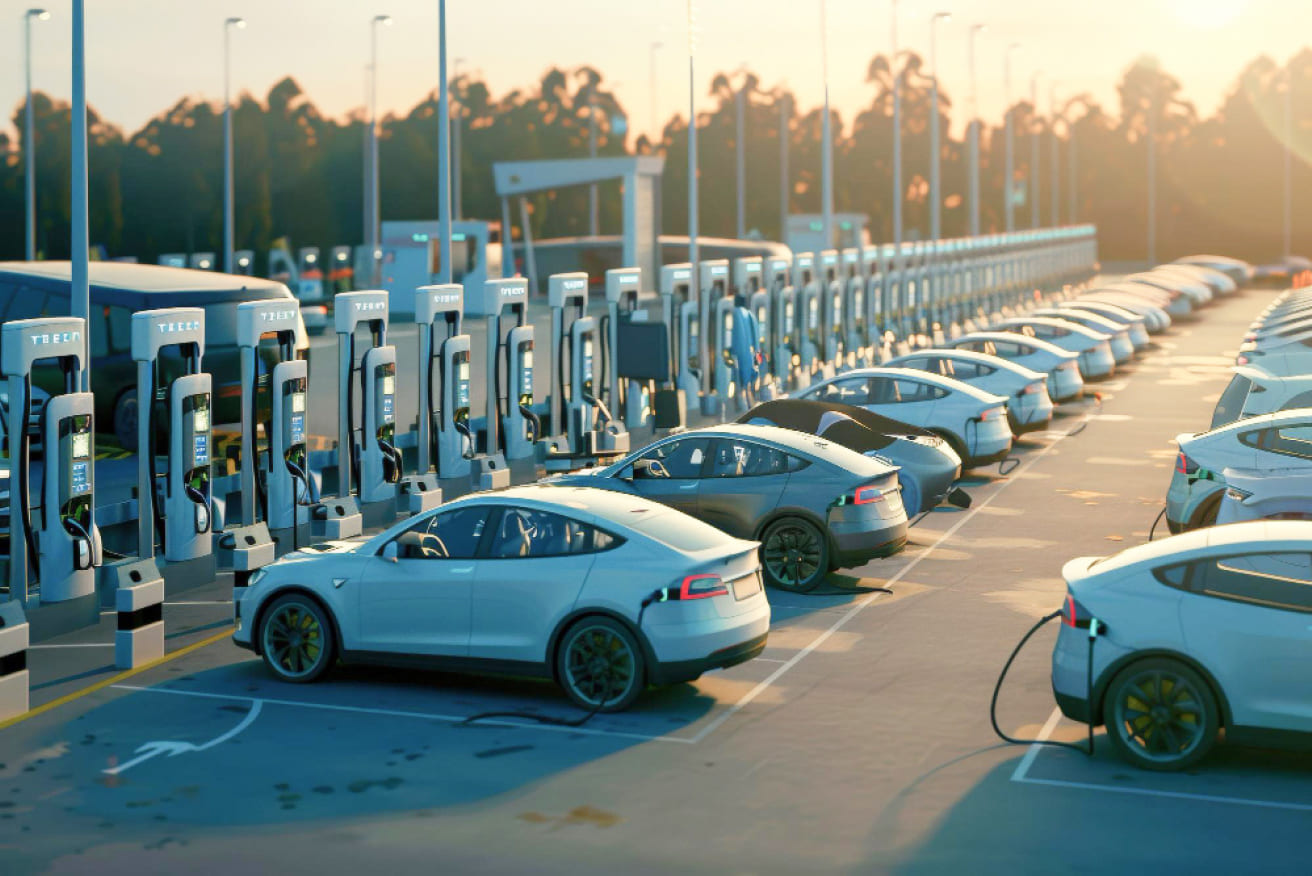
Electrifying a commercial fleet sounds simple in theory — swap gas-powered vehicles for electric ones and reduce emissions. In practice, the biggest obstacle isn't the vehicles themselves; it's charging. Fixed charging stations require real estate, installation permits, electrical upgrades, and long wait times, all of which slow down fleet operations and inflate costs.
This is where on demand EV charging USA services such as Jooser are changing the game. Instead of routing vehicles to a fixed location and waiting for a charge, fleet businesses can now bring the charging station directly to their vehicles — wherever they are parked, staged, or idle. For fleet managers balancing tight delivery windows, driver schedules, and operating budgets, on-demand fleet charging isn't just a convenience — it's becoming a competitive necessity.
In this post, we'll explore how these on-demand systems are reshaping fleet management and what fleet managers should look for in a provider.
Before diving into the benefits of fleet EV charging services, it's worth understanding the pain points fleet operators face with traditional, fixed EV charging setups:
For fleet businesses operating on thin margins and tight schedules, these constraints can outweigh the long-term savings that EVs promise — which is exactly the gap mobile EV charging solutions are designed to close.
On demand mobile EV charging flips the traditional model on its head. Rather than requiring vehicles to travel to a charging point, a mobile charging unit comes directly to the vehicle — at a depot, a job site, a parking lot, or even curbside. Fleet managers can schedule charging sessions around existing operations instead of building operations around charger availability.
This approach is particularly valuable for:
Also Read:- Why Roadside EV Charging Services in the USA Are Essential for Emergency Charging and Roadside Assistance
The single biggest advantage of on-demand charging providers is that vehicles get charged where they already are — overnight at the depot, between shifts, or during loading and unloading. There's no need to divert a vehicle from its route or schedule idle time just to reach a charging station. This keeps fleets moving and revenue-generating.
Building out a private charging depot is capital-intensive. Mobile EV charging solutions eliminate the need for fleet businesses to invest in permanent charging infrastructure, freeing up capital for vehicle acquisition, driver hiring, or other core operations. This is especially valuable for businesses still testing the waters of fleet electrification.
Fleets rarely operate from a single site. Whether vehicles are parked at satellite depots, client locations, or temporary job sites, fleet EV charging services delivered on demand can follow the fleet rather than the other way around. This flexibility is critical for businesses with distributed operations or seasonal site changes.
On demand mobile EV charging is typically billed per session or subscription, which makes budgeting more predictable than managing the variable costs of electrical upgrades, maintenance, and utility demand charges tied to fixed infrastructure. As a fleet scales, fleet EV charging services can scale with it — without the lag time of planning and building new stations.
Waiting on permits, construction, and utility upgrades can delay a fleet's transition to electric vehicles by months. Mobile EV charging solutions let fleet businesses start operating EVs immediately, bridging the gap while long-term infrastructure decisions are made — or removing the need for fixed infrastructure altogether.
Drivers who know on demand mobile EV charging can be scheduled wherever their vehicle is parked are less likely to worry about finding a station mid-route. This improves driver confidence and reduces the operational friction that often accompanies a shift to electric vehicles.
Many fleet businesses face growing pressure — from customers, regulators, or internal ESG targets — to reduce emissions. On demand mobile EV charging makes it easier to operate a fully electric fleet without the logistical hurdles that typically slow down sustainability initiatives.
Not all Fleet EV charging services are built the same. When evaluating an on-demand charging partner, fleet managers should consider:
On-demand EV charging is a service where a mobile charging unit travels to a fleet vehicle's location — a depot, job site, or parking lot — instead of the vehicle traveling to a fixed charging station. It allows fleet businesses to charge vehicles wherever they're already parked, without building permanent infrastructure.
A standard charging station is a fixed location that vehicles must drive to and wait at. Mobile EV charging solutions bring the charger to the vehicle instead, which removes travel time, queuing, and the need for dedicated real estate.
Yes. Because on-demand charging is typically billed per session or subscription, costs scale predictably with fleet size. It also removes large upfront capital expenses like electrical upgrades, permitting, and construction that come with fixed depot charging.
Yes. Fleet EV charging delivered on demand is location-agnostic — it can serve vehicles at satellite depots, client sites, temporary job sites, or anywhere else a fleet operates, without requiring infrastructure at each location.
Charging speed depends on the provider and equipment used, but most fleet EV charging services offer fast-charging options designed to match commercial turnaround times, so vehicles can be charged during normal downtime like overnight hours or shift changes.
No. One of the main advantages of on demand mobile EV charging is that sessions are scheduled around your existing operations — not the other way around — so routes, shifts, and delivery windows stay unaffected.
Coverage varies by provider and region. When evaluating an on demand EV charging USA partner, confirm they operate in every city or region your fleet serves before committing to a long-term plan.
Fleet electrification doesn't have to mean expensive infrastructure builds or operational slowdowns. On demand EV charging USA services give fleet businesses a faster, more flexible, and more cost-effective path to running electric vehicles at scale. By bringing the charger to the vehicle, this approach removes one of the biggest barriers to fleet electrification — and lets businesses focus on what matters most: keeping their vehicles on the road.
Jooser makes getting started simple. Booking takes less than a minute at jooser.com: enter your vehicle details and location, choose between an on-demand session or scheduling one in advance, and see transparent, upfront pricing with no hidden fees. A certified technician then arrives with a Level 3 DC fast charger — with real-time tracking so you know exactly when they'll pull up — and most vehicles reach 80% charge in roughly 20 to 45 minutes. For fleet businesses, that means fleet EV charging services can be up and running within days, not months, with no permits, construction, or utility upgrades required.

Julian Ebner is the Co-Founder of Jooser, driving strategic partnerships, business development, and growth initiatives to expand accessible and reliable mobile EV charging. With experience across entrepreneurship, sports management, and real estate, he brings a versatile, customer-focused approach to building innovative mobility solutions.