Get 10% Off On Your First Order CODE: FIRST10
Get 15% Off When You Refer A Friend Code: JFRIEND

Spring/Summer 2026

Commercial EV Charger Installation in New Jersey: Building Reliable Charging Infrastructure

How New Jersey businesses can use mobile and permanent EV charging to meet demand and reduce downtime.
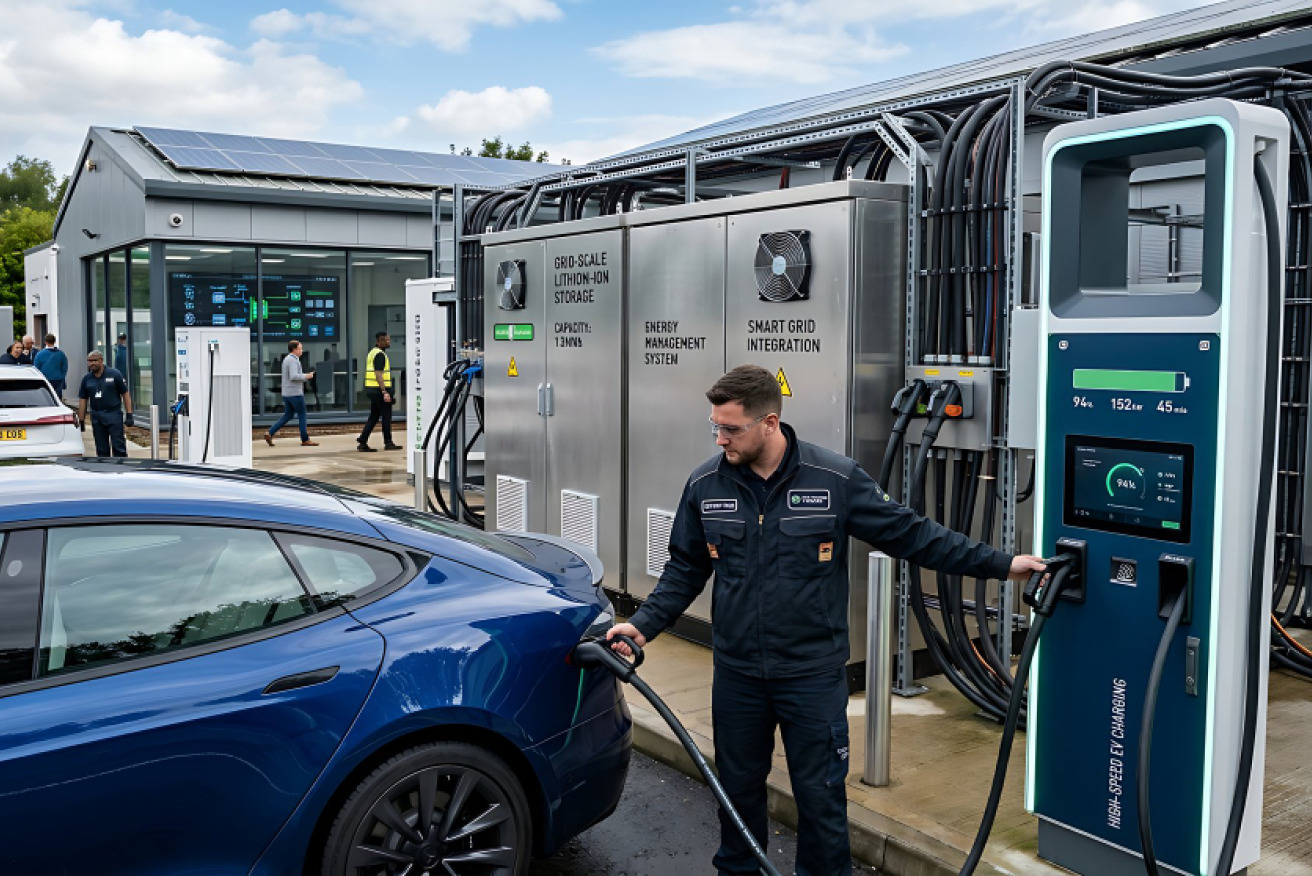
Commercial EV Charger Installation in New Jersey
Key Takeaways
  1. New Jersey passed 200,000 registered EVs in late 2024, and business charging demand keeps growing.
  2. Fixed charger projects take time: permits, utility upgrades and construction.
  3. In 2025, 14% of U.S. EV owners left a public charger without charging.
  4. Mobile charging gives apartments, hotels and fleets power in days, not months.
  5. Jooser brings Level 3 DC fast charging to your parking lot, 24/7.

New Jersey is adding EVs faster than it is adding plugs. By December 2024, the state had nearly 208,000 registered EVs, more than double the number from just two years earlier. If you run a building, a hotel or a fleet here, you feel that pressure every day. Drivers ask where they can charge. Tenants ask why the lot has no plugs. Fleet managers ask how to keep vans moving. We hear these questions from New Jersey property managers and fleet operators every week, and our honest answer is simple: plan for long-term chargers, but do not make your customers wait for them.

What Does It Take to Install Chargers at a Business?

Planning commercial EV charger installation in New Jersey is a smart long-term move, but it is rarely fast. A typical project needs a site survey, utility coordination, permits, electrical upgrades, trenching and final inspection. In older buildings around Newark, Jersey City and Hoboken, the electrical panel often runs out of capacity before the first charger goes in. State rules add more steps:

  • New developments: Multifamily projects with five or more units must set aside 15% of parking as EV make-ready. New commercial lots with more than 150 spaces must make 4% make-ready.
  • Grants: Workplaces, non-profits and multifamily sites can apply for up to $4,000 per Level 2 port.
  • Uptime: Any charger funded by a state incentive must stay operational at least 97% of the time.

Why Are Fixed Chargers Alone Not Enough?

In our view, fixed chargers are essential, but they are only half the plan. Here is why:

  • Reliability gaps: J.D. Power found that 14% of EV owners visited a public charger in 2025 and left without charging.[3] A dead charger can cost you a guest, a tenant or a delivery slot.
  • Slow timelines: Demand grows every month, while construction takes many months.
  • Limited capacity: One or two depot chargers cannot serve a growing fleet at once. Our guide to EV charging plug types for fleet operators shows how a hybrid strategy can improve uptime by up to 30%.

How Does Mobile EV Charging Fill the Gap?

This is where mobile EV charging in New Jersey changes the game. A certified Jooser technician arrives with a Level 3 DC fast charger that delivers up to 350 kW, and most EVs reach 80% in 20 to 45 minutes. There is no digging, no permit and no waiting on the utility. You book online or by QR code, and this on-demand EV charging in New Jersey model gives you a live arrival time and power right where the car is parked. We do not see it as a replacement for every fixed charger. We see it as the fastest way to start, and the smartest way to cover peak demand.

What Do Apartments, Hotels and Fleets Need Most?

  • Apartments: Most New Jersey EV owners live in garden apartments, condos or townhomes with shared, unassigned parking. The rules cover new builds, but older buildings cannot retrofit overnight. Jooser brings apartment EV charging to the parked car, so there is no HOA vote and no new wiring.
  • Hotels: State goals call for EV chargers at 20% of franchised overnight lodging, and a tourism grant program supports chargers at eligible hotels.[2] In our opinion, reliable hotel EV charging is quickly becoming part of a good guest experience. We can charge guest cars in your garage or valet line while your permanent plan takes shape. A Hoboken event organizer used us the same way, and guests charged without a single station being installed.
  • Fleets: Delivery, rideshare and logistics teams on the Turnpike and the Port Newark-Elizabeth corridor lose hours when a van detours to find a plug. Our commercial EV charging in New Jersey service charges vehicles at your depot or curb. See why more fleets are switching to on-demand charging.

Case Study: How Did a Newark Fleet Charge Without Building Anything?

  • The challenge: A logistics fleet in Newark had no room for permanent infrastructure and no time for downtime.
  • The solution: Instead of waiting on permits, the team booked Jooser to charge vehicles on-site.
  • The result: No construction and no downtime. As their fleet operations manager put it, “No infrastructure to build, no downtime, they just show up and get it done.”

Read the full story in our guide to EV charging challenges New Jersey drivers face.

Why Choose Jooser for Your New Jersey Property or Fleet?

  • Level 3 DC fast charging: Up to 350 kW, so most EVs reach 80% in 20 to 45 minutes.
  • Zero infrastructure: No trenching, permits or rewiring, and service can start within days.‍
  • 24/7 availability: Empty batteries do not keep business hours, and neither do we.
  • Real-time tracking: You get a live ETA by text or email from the moment you book.
  • Clear pricing: You see the full cost upfront, with no hidden fees.
  • Statewide coverage: We serve Hudson, Bergen, Essex, Middlesex, Union, Mercer, Monmouth and South Jersey.
  • Proven scale: We charge 1,000+ EVs every month and stand behind a 99.9% uptime guarantee. Here are the benefits of on-demand charging for fleet businesses.

What is the Smartest Next Step for Your Business?

Build your long-term plan, but do not make anyone wait for it. Whether you manage an apartment community, a hotel or a fleet, Jooser can start charging in days. Book your first charge and use code FIRST10 for 10% off, or email info@joosercharge.com for a quote.

FAQs

1. How long does commercial EV charger installation take in New Jersey?

A permanent commercial EV charger installation can take several weeks to months, depending on site surveys, permits, utility approvals, electrical upgrades, trenching, and inspections. Mobile EV charging can provide an interim solution while permanent infrastructure is being developed.

2. What type of EV chargers are suitable for New Jersey businesses?

Businesses can use Level 2 AC chargers for longer parking periods and Level 3 DC fast chargers for faster charging. Fleets, hotels, apartments, and high-turnover locations may benefit from combining both based on vehicle usage, parking duration, and electrical capacity.

3. What electrical upgrades are required for commercial EV charging?

Commercial EV charging may require panel upgrades, transformers, new circuits, load management systems, or utility service upgrades. A site assessment helps determine whether the existing electrical infrastructure can support the required charging load.

4. Can businesses use mobile EV charging before installing permanent chargers?

Yes. Mobile EV charging can provide temporary or supplemental charging without requiring trenching, permanent wiring, or charger installation. This can help businesses maintain charging availability while permanent infrastructure is being planned or upgraded.

5. How much power does a Level 3 DC fast charger provide?

DC fast chargers can provide substantially more power than Level 2 chargers. Jooser's mobile Level 3 charging service can deliver up to 350 kW, with charging time varying based on the vehicle's battery capacity, charging limits, battery state of charge, and other conditions.

6. How can businesses maintain EV charging uptime during peak demand?

Businesses can combine permanent charging infrastructure with mobile or on-demand charging to handle demand spikes, charger outages, and fleet charging requirements. Load management and charging schedules can also help distribute available electrical capacity more efficiently.

Conclusion

Julian Ebner
Co-Founder, Jooser

Julian Ebner is the Co-Founder of Jooser, driving strategic partnerships, business development, and growth initiatives to expand accessible and reliable mobile EV charging. With experience across entrepreneurship, sports management, and real estate, he brings a versatile, customer-focused approach to building innovative mobility solutions.